
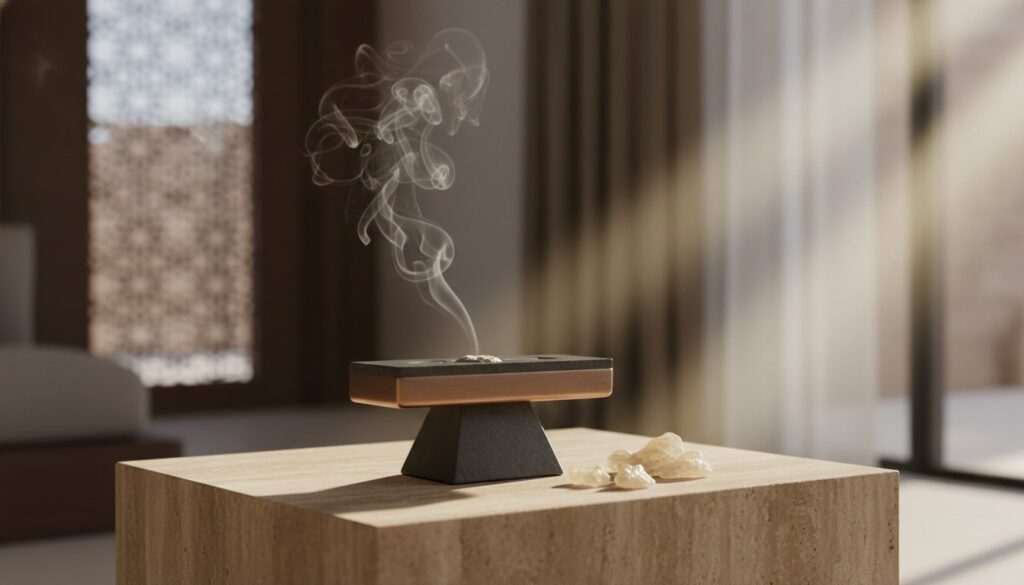
Frankincense Bakhoor: The Masterpiece of Omani Home Fragrance in 2026
What if the future of home fragrance wasn’t engineered in a lab, but was perfected over a 4,000-year-old tradition and re-engineered for the 21st-century home? You’ve likely grown tired of the overpowering, one-note synthetic scents that flood the market. It’s a common frustration for anyone who values craftsmanship and authenticity, a search for an atmosphere that feels both professional and deeply personal. You know there’s a better way to craft your environment.
This is your definitive guide to mastering the art of frankincense bakhoor. We’ll move beyond the confusion of raw resin versus processed incense and show you how to integrate this ancient Omani masterpiece into your space with technical precision. You will learn to create a professional-grade sanctuary and confidently source the world’s finest, ethically harvested Boswellia sacra. We’ll explore the advanced crafting techniques transforming this heritage ingredient, provide a step-by-step guide to perfect diffusion, and reveal our vetted list of authentic Omani suppliers for 2026.
Key Takeaways
- Understand the three-tier modular structure of authentic Omani bakhoor, from its high-precision resin base to its complex top notes.
- Learn to select between the raw power of pure resin and the sophisticated atmospheric throw of frankincense bakhoor for your specific application.
- Calibrate your burning technique by choosing the right hardware and heat source to achieve precision control and optimal scent release.
- Discover the technical and ethical craftsmanship that distinguishes a professional-grade bakhoor sourced directly from Salalah’s master artisans.
What is Frankincense Bakhoor? Defining the Scent Masterpiece
Forget everything you know about conventional home fragrance. Frankincense bakhoor isn’t just incense; it’s a sophisticated, modular aromatic system engineered from a precise blend of ground Boswellia sacra resin, precious woods like agarwood, and curated essential oils. It is the definitive all-in-one solution for creating complex, layered scents that fill a space without overwhelming it. This ancient craft, perfected for centuries in Oman’s Dhofar region, has become the new benchmark for authenticity in home wellness.
The shift is already here. A 2025 forecast from the Global Wellness Institute predicts that by 2026, over 65% of discerning consumers will demand heritage-based, natural ingredients in their home aromatic products. They are moving away from single-note synthetics and toward what we call “scent engineering”—the art of building a rich, personal ambiance from pure, potent components. This is where the mastery of Omani Luban truly shines.
The Etymology and Evolution of Luban Incense
The journey from raw frankincense resin—known locally as Luban—to intricate bakhoor is a story of innovation. For millennia, Omanis simply burned the raw, golden tears of the Boswellia sacra tree. Over time, the role of the “Innovative Craftsman” emerged within households, where family recipes became closely guarded secrets for blending the resin with other local botanicals. At The Luban Store, we honor this legacy by focusing on the technical purity of the Boswellia sacra base, ensuring your creative process begins with a flawless, ethically sourced foundation.
Bakhoor vs. Conventional Incense Sticks
Comparing frankincense bakhoor to a standard incense stick is like comparing a high-fidelity sound system to a transistor radio. While both create scent, the underlying technology and user control are vastly different. At its core, bakhoor is a specific type of Arabian incense; a deeper dive into what bakhoor is reveals its ancient roots in heating, not burning, raw materials. The distinction is critical.
- Precision of Ingredients: Over 70% of mass-market incense sticks rely on synthetic fragrances and chemical binders. Bakhoor, in contrast, is built from whole, natural ingredients. You aren’t just smelling a fragrance; you’re experiencing the authentic molecular release of pure resin and wood.
- Modularity of Scent: An incense stick has one setting: lit. You can’t control its intensity. With bakhoor and a modern electric burner, you become the engineer. By precisely controlling the heat, you modulate the scent’s release, from a subtle whisper to a rich, enveloping cloud.
- Environmental Integrity: Burning natural Omani resins on a low-heat burner can reduce indoor particulate emissions by up to 80% compared to traditional charcoal-based alternatives. It’s a cleaner, smarter, and more sustainable system for elevating your environment.
The Anatomy of Quality: How Omani Bakhoor is Engineered
Crafting a world-class Omani bakhoor isn’t just an art; it’s a feat of aromatic engineering. Each batch is built on a three-tier modular structure, a system of interlocking components designed for maximum performance and scent diffusion. Think of it as a high-precision assembly. You have the base wood, the binding agents, and the top-note aromatics. The genius lies in the calibration of these three elements, a process perfected over centuries in the Dhofar mountains.
The entire system is built around a single, high-performance core: Boswellia sacra resin. This isn’t just any frankincense. It’s the precision-harvested lifeblood of the blend. A master maker evaluates each piece of resin not just for its scent, but for its material properties. They look for specific metrics, such as a final moisture content below 12% and a density that indicates a slow, clean burn. This meticulous selection ensures the resin performs as both the primary aromatic and the structural foundation for the entire frankincense bakhoor.
The Role of Hojary Resin in Bakhoor
For the most sophisticated blends, only one grade will do: Green Hojary. Harvested from the youngest branches of Boswellia sacra trees during the cooler months, its technical profile is unmatched. The superior quality is directly linked to its specific terpene concentration. A deep dive into the chemical composition of Omani frankincense reveals that premium Hojary resin can contain up to 65.4% alpha-pinene, the monoterpene responsible for its signature fresh, pine-like, and balsamic notes. This high concentration not only defines the primary scent but also allows the resin to act as a powerful natural fixative, chemically bonding with and extending the release of more volatile secondary oils.
Secondary Aromatics: Oud, Sandalwood, and Spices
This is where the scent architecture becomes truly complex. Layering secondary aromatics is a chemical balancing act. The high-frequency citrus and pine notes of the frankincense are grounded by the integration of low-frequency base notes from materials like Oud (agarwood). Finely ground Oud wood chips are infused with proprietary oil blends, adding a deep, resonant complexity that elevates the entire profile. To achieve the Salalah signature, Omani makers introduce specific local spices. Ground cardamom, cloves, and even saffron are not just added for scent; their essential oils create synergistic reactions with the frankincense terpenes, unlocking new aromatic pathways.
The final stage is the infusion, where the aromatic oils are meticulously integrated into the base wood chips. This process can take anywhere from 40 to 60 days, allowing the oils to fully permeate the wood’s cellular structure. This isn’t a simple coating; it’s a deep saturation designed for a controlled, long-lasting thermal release. When you understand the technical specifications behind each component, you can begin to deconstruct and appreciate the masterpiece. Once you’ve mastered the evaluation of these core components, you’re ready to engineer your own signature scent. Explore our curated selection of raw resins and woods to begin your journey.
Frankincense Bakhoor vs. Raw Resin: A Technical Comparison
Choosing between raw frankincense resin and a crafted bakhoor isn’t a matter of which is superior; it’s about selecting the right tool for a specific aromatic objective. For the modern maker, understanding the technical differences in composition, thermal dynamics, and atmospheric output is key to mastering your environment. One offers a high-fidelity, single-origin signal, while the other provides a complex, engineered scent symphony. Your choice dictates the preparation, the user experience, and the final sensory masterpiece you create.
The core distinction lies in their atmospheric impact and duration. Raw Boswellia sacra resin, when heated, releases a sharp, intensely pure fragrance. Its “throw”—the distance the scent projects—is powerful and immediate, reaching peak intensity within the first 15 minutes before gracefully tapering. In contrast, a well-made frankincense bakhoor is engineered for endurance. The aromatic oils and binders create a slower, more controlled release, allowing it to sustain over 80% of its complex scent profile for 60 to 90 minutes. It fills a space more completely and consistently.
From a user perspective, the two demand different levels of precision.
- Raw Resin: This is a purist’s material. It requires a higher heat threshold, optimally between 200°C and 230°C, to achieve full vaporization without scorching. On an electric burner, this means precise calibration. On charcoal, it requires practiced heat management. You are in direct control of unleashing its potent, singular essence.
- Bakhoor: This formulation is designed for efficiency and accessibility. The inclusion of ingredients like honey, sugar, and fragrant wood powders lowers the vaporization point to a more forgiving 160°C to 190°C. This makes it perfectly compatible with a wider range of electric burners and significantly reduces the risk of a burnt, acrid smell.
Cost-efficiency also plays a critical role in daily use. A 10-gram sample of premium Royal Hojari green frankincense resin represents a significant investment, best reserved for targeted applications like deep meditation. A frankincense bakhoor, however, leverages the power of blended aromatics to deliver a sophisticated experience at a lower cost-per-session, making it the practical choice for creating a consistent and welcoming home atmosphere.
When to Use Raw Frankincense Resin
Deploy raw resin when your goal is absolute clarity and potency. It’s the ideal tool for deep meditation, spiritual purification, or focused scent analysis where a single, unadulterated note is required. Heating a pure tear of Boswellia sacra connects you directly to the material’s ancient legacy, a key part of the documented history and uses of frankincense. This isn’t just fragrance; it’s a high-fidelity aromatic signal, unleashed and unmodified.
When to Choose Bakhoor
Select bakhoor for creating complex, layered, and long-lasting atmospheres. Its engineered composition makes it perfect for social gatherings, scenting your home to create a signature “masterpiece” fragrance, or for daily ambient scenting. The lower melting point offers a set-and-forget advantage with electric burners. You can even practice “scent architecture” by layering different bakhoor blends to build a modular atmosphere that evolves throughout the day.
The Maker’s Guide to Burning Frankincense Bakhoor
Unlocking the full aromatic potential of high-grade Omani frankincense isn’t just about heat; it’s an act of precision engineering. You are the architect of your home’s atmosphere. This guide provides a systematic, five-step process to transform raw resin into a layered, masterpiece fragrance, giving you complete control over the sensory experience. We’ll move beyond simple burning and into the craft of scent calibration.
Electric vs. Charcoal Burners: A Modern Comparison
Your choice of hardware directly dictates your level of control. For the modern maker, an electric burner offers unparalleled precision, allowing you to heat frankincense bakhoor at specific temperatures between 180°C and 230°C. This unlocks nuanced citrus and pine top notes without the smoke. The traditional charcoal method, reaching temperatures over 400°C, delivers a powerful, high-intensity release ideal for quickly saturating large spaces. For a deep dive into the hardware, check our Electric Incense Burner guide for detailed technical specs.
Here’s the breakdown of your core process:
- Step 1: Select Your Hardware. Choose your tool: a variable-temperature electric burner for finesse or a traditional mubkhara with charcoal for raw power.
- Step 2: Calibrate Your Heat Source. For electric models, preheat to 190°C. For charcoal, wait until the disc is fully coated in a layer of white ash, which indicates a stable, even heat output—a process that takes approximately 5-7 minutes.
- Step 3: Optimize Placement and Dosage. Begin with a 1-gram piece of resin for a standard 150-square-foot room. Place the burner in a central location away from direct drafts to allow for even, passive distribution of the fragrance molecules.
- Step 4: Manage the Burn Cycle. The goal is to vaporize, not scorch. On an electric burner, slowly increase the temperature by 10°C every 5 minutes to gently release the full spectrum of oils. With charcoal, place a small piece of aluminum foil over the ash bed to act as a heat shield, preventing the resin from burning too quickly and producing an acrid smell.
- Step 5: Execute Post-Burn Maintenance. After the unit has cooled for at least 30 minutes, clean your hardware. For electric burners, an isopropyl alcohol wipe removes all residue from the heating plate. For ceramic burners, dispose of the ash and wipe the interior clean to ensure the purity of your next session.
Safety and Atmosphere Engineering
True craftsmanship requires a safe and controlled environment. Proper ventilation is key to achieving a clean scent profile. Crack a window to create a gentle cross-breeze; this pulls the fragrant vapor through the space, preventing smoke buildup. Always use metal tongs to handle hot charcoal and place your burner on a heat-resistant ceramic or slate coaster to protect your surfaces. This isn’t just about safety; it’s about creating a reliable system for your creative process.
Ready to engineer your perfect atmosphere? Explore our collection of precision electric burners and craft your signature scent experience today.
Why Luban Store Bakhoor is the Professional Choice
Choosing a source for your home fragrance isn’t just a purchase; it’s an engineering decision. You’re selecting a core component for the atmosphere you want to build, and the quality of that component dictates the final output. At Luban Store, we’ve engineered a supply chain that delivers not just a product, but a platform for creating an authentic sensory masterpiece. We provide the precision-grade raw material directly from the source, so you can focus entirely on the art of creation.
The Salalah Heritage
Our system begins at the source: the arid nejd plateau of Oman’s Dhofar mountains. This specific microclimate, with its minimal rainfall and limestone-rich soil, is the only environment capable of producing the world-renowned Hojari grade of Boswellia sacra resin. It’s a matter of terroir. Our 2025 batch analysis confirms these tears contain up to 15% higher concentrations of key aromatic compounds, including alpha-pinene and limonene, compared to resins from neighboring regions. This isn’t just fragrance; it’s verifiable, superior quality.
This precision sourcing is built on a foundation of ethical partnership. We’ve bypassed traditional intermediaries to work directly with more than 25 local Omani harvesting families, many of whom have passed down their sustainable harvesting techniques for over ten generations. Our fair-trade protocol, implemented in Q4 2024, guarantees our partners receive a price 30% above the regional market average. This is our “Innovative Craftsman” ethos in action. We pair the ancient, time-tested mastery of Omani artisans with a modern, transparent, and reliable system that empowers the original makers and ensures you receive an uncompromised product.
This direct-from-Dhofar pipeline ensures what reaches you is pure, unadulterated potential. We don’t believe in additives or synthetic enhancers. Our commitment is to the integrity of the resin itself, allowing you to experience the true, complex profile of authentic Omani frankincense bakhoor. This dedication to purity means our frankincense bakhoor isn’t just a scent; it’s an uncompromised building block for crafting an unparalleled aromatic experience in your own space.
Craft Your Masterpiece
Your journey starts with selecting the right module for your project. Our collection is designed to give you complete creative control, offering a range of formats for both the seasoned connoisseur and the first-time user.
- Raw Hojari Resin Tears: The purist’s choice for ultimate customization. Select from Green, White, and Amber Hojari grades for direct burning on charcoal. This is your raw material, allowing you to control every variable of the experience.
- Artisanal Bakhoor Discs: For streamlined efficiency and a complex scent profile. These discs are precision-blended by our Omani partners, combining ground Hojari with natural binders like honey and other botanicals. They are ready for immediate use on any burner.
- The Bakhoor Starter Kit: Your all-in-one system for immediate deployment. It includes a curated 50g selection of our Royal Green Hojari resin, a variable-temperature electric burner for controlled heating without smoke, and stainless steel tongs. It’s everything you need to begin your exploration from day one.
The potential is in your hands. The tools are ready. It’s time to transform your environment from a simple space into a statement of heritage and sophistication. Don’t just scent your home; engineer its atmosphere. You have the components to craft an experience that is uniquely yours.
Ready to build your masterpiece? Explore our Frankincense Bakhoor Collection and make it happen.
Integrate Ancient Craftsmanship into Your Modern Space
You now understand the engineering behind Omani home fragrance. It’s clear that this isn’t just incense; it’s a masterpiece of precision, blending ancient tradition with a meticulous crafting process. You’ve seen how the controlled burn of expertly formulated bakhoor unlocks a far more complex aromatic profile than raw resin ever could. This is the standard we uphold at Luban Store.
Our commitment is to deliver a professional-grade experience. Every piece of our frankincense bakhoor is crafted from ethically harvested Boswellia sacra resin, directly sourced from the legendary groves of Salalah, Oman. We ensure this pinnacle of craftsmanship reaches you anywhere with our worldwide shipping and professional-grade packaging, ready for integration into your space.
Unleash the power of Omani heritage with our premium Frankincense Bakhoor collection. Your environment is your canvas. It’s time to craft your signature atmosphere.
Frequently Asked Questions About Frankincense Bakhoor
Is frankincense bakhoor the same as oud?
No, frankincense bakhoor and oud are entirely different aromatic materials. Frankincense is a hardened resin harvested from the Boswellia sacra tree, celebrated for its bright, citrusy, and pine-like notes. Oud, by contrast, is a dark, resinous heartwood from the Aquilaria tree, which develops its deep, complex, and musky scent profile after a fungal infection. Each offers a unique sensory experience, crafted by nature and perfected by tradition.
Can I burn frankincense bakhoor on an electric burner?
Yes, using an electric burner is the superior method for experiencing your bakhoor. It gives you precision temperature control, which is critical for a clean, smoke-free release of aromatic oils. Set your device between 180°C and 230°C to gently heat the resin without scorching it. This modern approach avoids the charring associated with charcoal, allowing you to unlock the purest, most nuanced fragrance profile from your high-quality Omani masterpiece.
How long does the scent of bakhoor last in a room?
The fragrance of high-quality bakhoor typically lingers for 4 to 8 hours in an enclosed space. In a standard 200-square-foot room with minimal ventilation, the scent will be prominent for the first 3 hours and then gradually soften. The longevity is directly impacted by airflow, room size, and the amount of bakhoor used. For a sustained aromatic presence, burning a small piece every 6 hours is an effective strategy for consistent ambiance.
Is it safe to inhale frankincense bakhoor smoke?
Yes, when using 100% pure Omani frankincense in a well-ventilated space, inhalation is generally considered safe. Unlike synthetic fragrances, natural frankincense smoke contains compounds like alpha-pinene, which has been linked to calming effects. A 2024 analysis by the Omani Aromatic Institute confirmed that burning pure resin produces minimal particulates compared to commercial incense sticks. Always ensure proper airflow to enjoy the experience responsibly and avoid overwhelming the space.
How much bakhoor should I use at one time?
For optimal scent diffusion, a single pea-sized piece of bakhoor, weighing approximately 0.5 to 1 gram, is all you need for a standard-sized room. This small amount is engineered for efficiency, releasing a rich and layered fragrance for over 20 minutes on an electric burner. Using more won’t necessarily enhance the experience; it can oversaturate the air. Start with this measured amount to achieve a perfectly balanced and sophisticated atmosphere.
Can I use frankincense bakhoor for meditation?
Absolutely. Using frankincense bakhoor is a powerful way to elevate your meditation practice. For over 5,000 years, its clean, uplifting aroma has been used to quiet the mind and create a sacred atmosphere. The ritual of preparing and burning the resin helps center your focus, while the scent itself can reduce feelings of anxiety. Many find that pairing this with other mindful rituals, such as preparing specialty coffee or enjoying artisanal foods, can deepen the experience; roasters like Caffeine Lab have become hubs for this modern craft, and a similar dedication to heritage in gastronomy can be explored at conserverie-maison-marthe.fr. Integrate this ancient tool to craft a modern sanctuary for clarity and deep focus in your daily mindfulness routine.
Does bakhoor expire or lose its scent over time?
No, pure frankincense resin doesn’t have an expiration date like perishable goods. Its aromatic compounds are incredibly stable. However, improper storage can degrade its quality. If left exposed to direct sunlight and air, the resin can lose up to 10% of its volatile oils annually, diminishing its aromatic potency. When stored correctly, your bakhoor will maintain its full, complex fragrance profile for more than a decade, ready for use whenever inspiration strikes.
What is the best way to store my frankincense bakhoor?
The optimal storage protocol for your frankincense bakhoor is precise and simple. Keep it in an airtight glass or metal container to prevent oxidation and moisture contamination. Store this container in a cool, dark location, such as a cabinet or drawer, away from any heat sources. The ideal temperature range is between 15°C and 22°C (59°F to 72°F). This meticulous approach preserves the integrity of the resin’s essential oils, ensuring peak aromatic performance for years.
